Xiaosu Han AAC (also known as Xax) and Andreas Thalhammer AAC demonstrate how two perspectives can seamlessly unite to redefine modern cinematography.
For Xax, the journey began with a school trip, where a camera first fell into his hands. “Even back then, I cared about having the best camera for the shots,” he recalls. His fascination with technology, lenses, lighting—and the mechanics of filmmaking—became an obsession. Andreas, on the other hand, grew up in a small Austrian village, cultivating a love for films through family vacations captured on home video and weekly visits to the local cinema. “There wasn’t much else to do at the weekend,” he laughs. Movies helped him to see the world differently.

Both Xax and Andreas faced similar challenges when breaking into the film industry. With no family ties to the creative world, they encountered a traditional, hierarchical system in Austria that felt more like an obstacle course. Yet instead of following that rigid ladder, they chose independence—and collaboration. “We went the indie route, making short films and music videos with borrowed gear, financed with our own savings and sheer determination,” Andreas says.
The timing worked in their favor. The early 2000s marked a new digital era, with high-quality cameras in their hands, such as the Panasonic HVX and the RED One becoming accessible. Xax and Andreas embraced this revolution, traveling worldwide for early projects—from Hong Kong to New York—with little more than gear, grit, and a passion for storytelling. “The first time we got ‘paid’ for a project? It was $100 to $150 a day, and we had to pay for our own flights,” Andreas admits. Yet these experiences, often with debut directors on micro-budget films, became their greatest film school.

Still, many were curious about how their unique partnership functioned: two DPs on one project? It sounded unconventional at best and risky at worst. But their method—dividing responsibilities while remaining united in creative decisions—proved to be an asset. With their synchronized workflow, they make decisions faster, adapt more easily, and often provide different perspectives to improve the final outcome.
Their craft is rooted in meticulous preparation.“Prep is everything,” says Xax. For them, preparation isn’t about creating constraints but about enabling freedom—ensuring flexibility and innovation on set. Some directors storyboard every frame; others decide blocking on the day. “Our job is to adjust to those differences while always staying ready,” Andreas says. In either case, they strive to prepare lighting, locations, and setups that allow the director’s vision to come alive, no matter the obstacles.
One of the pivotal moments in their career was working with Austrian actor-director Josef Hader on Wilde Maus. While Austria remains their home base, they started their careers looking outwards—traveling to places like China, the U.S., and Germany. Small markets and tight budgets initially made career growth difficult—but now, larger-scale productions are shooting here, and that’s exciting,” Andreas says. They still treasure moments shooting abroad, but returning to Austria has its advantages: “The relationships we’ve built with crews here—people we trust deeply—make projects here special.”

When asked about the aesthetics that inspire their work, films like Fight Club (David Fincher, 1999) and Hero (Zhang Yimou, 2002) fueled their early love for visual storytelling. They speak passionately about the precision of Asian cinema, the rhythm of Denis Villeneuve’s narratives, and the understated elegance of Roger Deakins’ cinematography. “Deakins’ philosophy—how he supports the story without making the visuals overpowering—has always resonated with us,” says Andreas.
Xax and Andreas’ ability to adapt is impressive. Their projects span a broad spectrum: a black-and-white arthouse film in China, a period drama in 1905 Vienna, a single-set sci-fi thriller, and large-scale narrative TV series spanning three countries. “Our work doesn’t look the same,” Xax says. “That’s our point of pride.” They shape the visuals to serve the story, ensuring every project feels distinct—tailored to the narrative instead of imposing a signature style.
Their relationship with technology is similarly balanced. “We like tools that help the story, but we won’t let technology dictate our process,” Xax explains. They remain pragmatic: “You can shoot on an iPhone if it’s right for the project,” Andreas adds, “but we still need reliability. Especially when working on bigger shows, you need tools that deliver, without exception. That’s non-negotiable.”
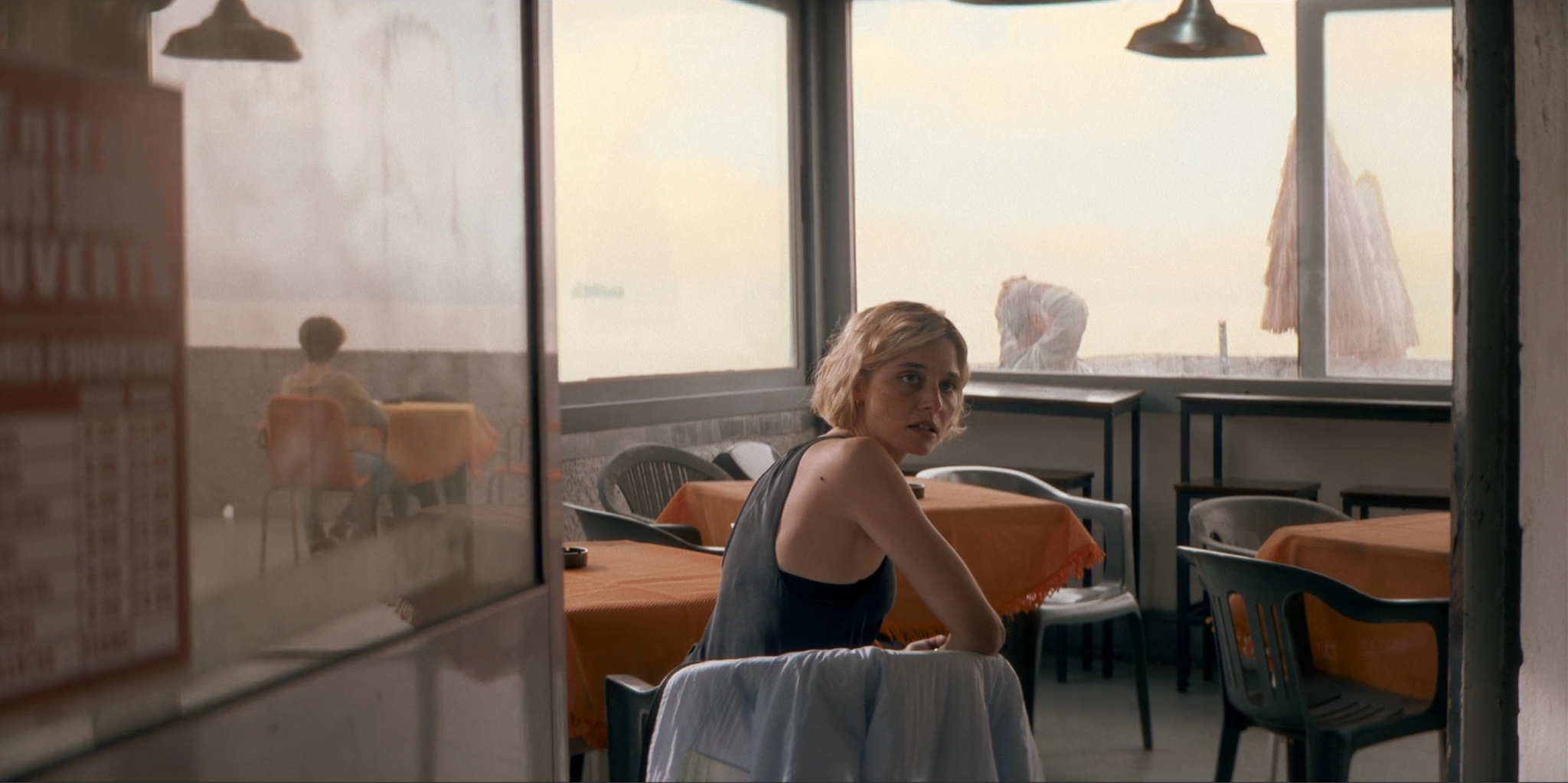
And their journey is far from over. They’re venturing into new territory, currently writing their own screenplay. “It’s time to create something that’s fully ours,” Andreas says. “We’ve spent years helping bring other people’s visions to life. Now we also want to tell our own story.”
When asked to define cinematography in a single sentence, both answers land in harmony. Andreas says, “Cinematography is there to support the story.” Xax echoes the sentiment, adding, “It’s helping bring the director’s vision to the screen.” In those words lies the secret to their partnership—two craftspeople, aligned in purpose, creating worlds where every frame serves a story.
Emerging from Austria’s small yet rich film community, Xiaosu Han AAC and Andreas Thalhammer AAC are much more than cinematographers. They’re collaborators, storytellers, and innovators—a duo reminding us that filmmaking, at its best, is a collective art.