Manu Dacosse was sixteen when his father bought a video camera to film the family holidays. It didn’t stay on holiday duty for long. Belgium had just produced Man Bites Dog, the savage, darkly funny mockumentary in black and white that made a generation of Belgian teenagers want to grab a camera and do something reckless with it. Manu and his friends took the family camcorder and tried to make their own version. Nobody in his family worked anywhere near cinema. His father was a bank employee and his mother taught at a primary school. “I’m really the first one,” he says, with the slightly amused air of someone who still finds it a little unlikely.

Before film school there was photography school, and before that a small darkroom set up in the basement at home. There he mixed the chemicals himself, chose the filters for the enlarger and waited for the image to come up in the tray. He remembers it as slow, fiddly and wonderful. Today he still carries a Leica Q almost everywhere and sometimes loads his old Nikon FM2 with film. He likes how a roll from the lab always brings a surprise, something you didn’t quite plan.
He arrived at film school in Belgium wanting to make documentaries. Then came the lighting exercises, and something shifted. He discovered he loved shaping light, and the plan changed. He is honest that he was never a brilliant student before that point. What he values about Belgian film schools is how open they were: no labyrinth of entrance exams like the ones he associates with the big French school, and teachers who let students find their way. Once inside, he worked hard.
What followed looks less like a ladder and more like a map with a lot of detours. He shot news for television, often four locations in a single day, each with different light, each needing five minutes of usable pictures fast. Then a friend from school who lived in Lebanon pulled him to Beirut, where he spent three years as a camera assistant on commercials for Dubai and Saudi Arabia, until war in Lebanon sent him home. Back in Belgium he joined the crew of the Flying Cam, an early remote controlled helicopter system that came long before modern drones. He fuelled the helicopter and loaded the camera, while shooting short films with friends on the side. Then one of those friends got a feature off the ground. That was his first film as director of photography.
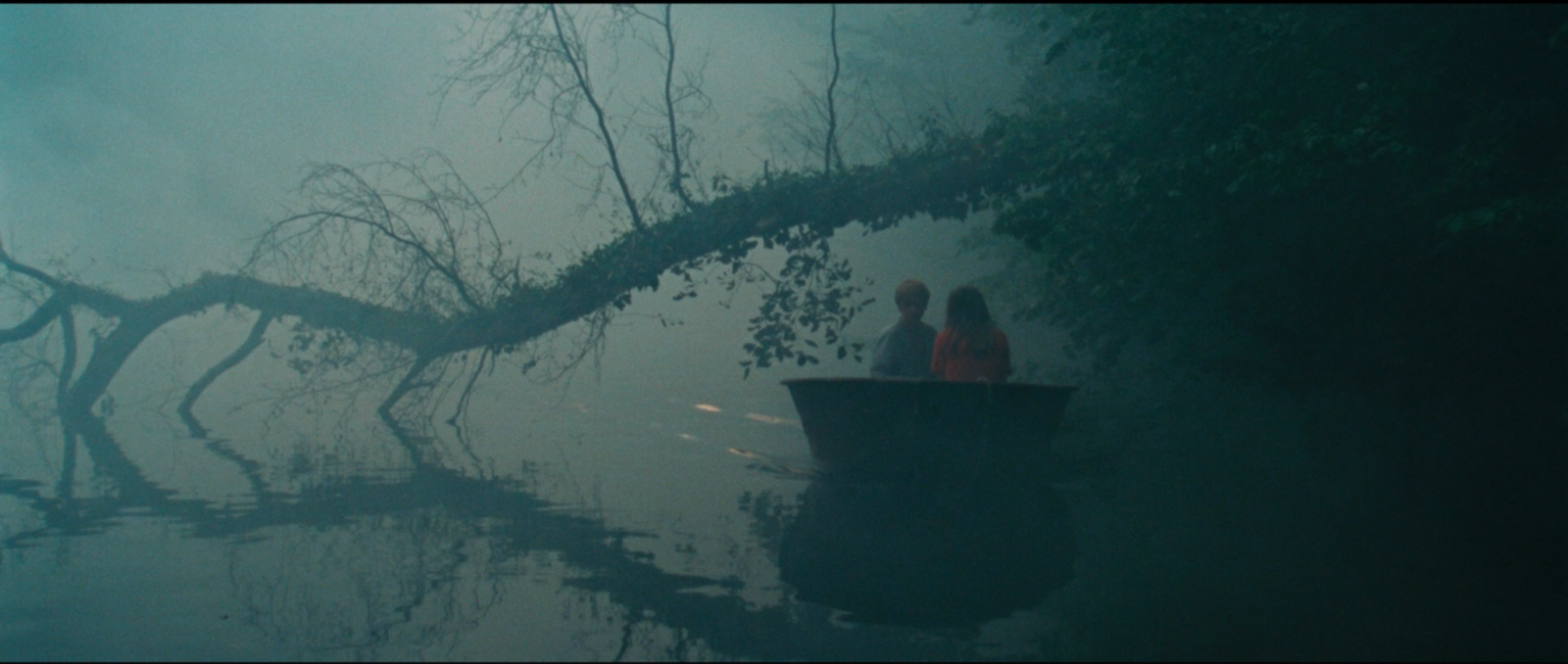
The timing helped, and he is happy to say so. Belgium’s tax shelter system was bringing in coproductions from France, Germany and elsewhere, and suddenly foreign films needed Belgian cinematographers just as he was ready. “In our career, luck is really important,” he says. “Sometimes you just meet the good people at the good moment.” Being Belgian shaped him in another way too. He jokes that a small country never wins a war, and he credits that with keeping him modest. When he started working in France, he found himself using less light and fewer people than his French colleagues expected. He feels the same humility inside the Belgian Society of Cinematographers, where nobody brags about what they shot. Instead, the meetings are where he discovers younger DPs, and where he picks up new tools from members who already know them better than he does.
Arrive with him on a first location scout and you’ll see the same ritual every time. He checks whether the place is beautiful, takes a lot of photos, then goes straight to the openings in the walls. “The first thing I look at is the windows,” he says. “Windows, and then windows.” He learned much of this as an assistant to a Danish cinematographer shooting in Belgium, who lit almost everything with daylight. That DP pointed out that the grey Belgian sky turns every window into a huge soft source that barely changes between nine in the morning and four in the afternoon. Manu still takes snapshots in friends’ apartments when the sun falls nicely across a room, filing away a reference he might rebuild one day on a stage.

That fondness for real light runs through a filmography that is anything but uniform. He began his feature career with Hélène Cattet and Bruno Forzani on Amer, and went on to shoot their stylised, hallucinatory films The Strange Colour of Your Body’s Tears, Let the Corpses Tan and Reflection in a Dead Diamond. With Fabrice Du Welz he made the feverish Alleluia, Adoration and Maldoror. He also shot Lucile Hadžihalilović’s Evolution, which won the jury prize for cinematography at San Sebastián. With François Ozon he has made L’Amant double, By the Grace of God, Peter von Kant and, most recently, The Stranger, Ozon’s adaptation of Camus. Shot in black and white, it won him the Lumière award for best cinematography and a César nomination. Ask whether all this adds up to a signature and he resists the idea. “The vision should come from the director,” he says. “We make movies for the director, not for me.”
On set, what he enjoys most has grown clearer over the years: lining up a shot. Choosing the 35mm, starting on a hand and finding the head, and at the same moment deciding where the light has to come from to make that move work. He loves the problem of a new scene, where the point of view should sit and how the actors and the light fit inside it. Prep he describes with a shrug. He doesn’t love it, because what he really loves is shooting and feeling the moment, but he does it seriously. On his last film with Anne Paulicevich, The Man Who Could Change the World, the two spent three weeks building the shot list together, trading ideas every day. Other times he prefers the opposite: handheld, no plan, go.

The project that tested him hardest was The Emperor of Paris, his first big budget film, which he shot at forty. It had huge sets, a large crew, and long night and day work, including lighting an entire cathedral around Vincent Cassel. Daylight, he points out, can be harder than night when you’re trying to make every image beautiful. What he takes away from it is less the film itself than pride in what he and his team pulled off.
That team matters to him. He wants his crew to feel trusted and to speak up. “I’m not like the big boss,” he says, although someone still has to make the final call, and that’s him. He describes himself as a quiet person and looks for quiet people who stay calm under pressure. In a country where he knows no one, he chooses crew over coffee, asking a few questions and watching how people react. He also makes a point of bringing new faces into his regular French and Belgian team, because new people come with new ideas. Sets, he thinks, have become more respectful since he started twenty years ago.
He is curious, not panicked, about artificial intelligence. On his latest shoot the team ran tests to see what new tools could do with birds that were hard to film for real. He can imagine a future where nobody blocks a busy city center or stages a real car crash anymore. But it is still a tool, he says, and he believes there will still be real actors in front of the camera ten years from now. That latest film, finished just days before our conversation, follows two children on the French coast who fall in love with birds and learn to whistle their songs, until whistling becomes their life and takes them around the world with musicians. He loved working with the kids. He would also love to shoot a really good comedy one day, which he considers one of the hardest things to get right.

His advice to his younger self is simple: keep shooting, because you never know what will come of it, and stay close to the directors you believe in, even the ones you argue with. Right now he has three or four projects on the table, none of them fully greenlit, and a hunch that the next one will be French. As for the job itself, he explains it to his family the same way he probably would have at sixteen with that holiday camera. “I’m doing pictures for a movie,” he says. Amazing pictures, we say.