There are cinematographers whose images feel like something elusive: a presence, a sensitivity, a way of listening to a place and to a person until the frame quietly becomes inevitable.
Inti Briones DFP, ACC, ABC belongs to that group. Born in Peru in 1971, raised in Lima with a Chilean mother, Briones carries South America not as a label, but as lived experience: Peru, Chile, Brazil, and the wider region as a creative territory where scarcity, politics, geography, and intimacy shape the craft as much as any camera package.
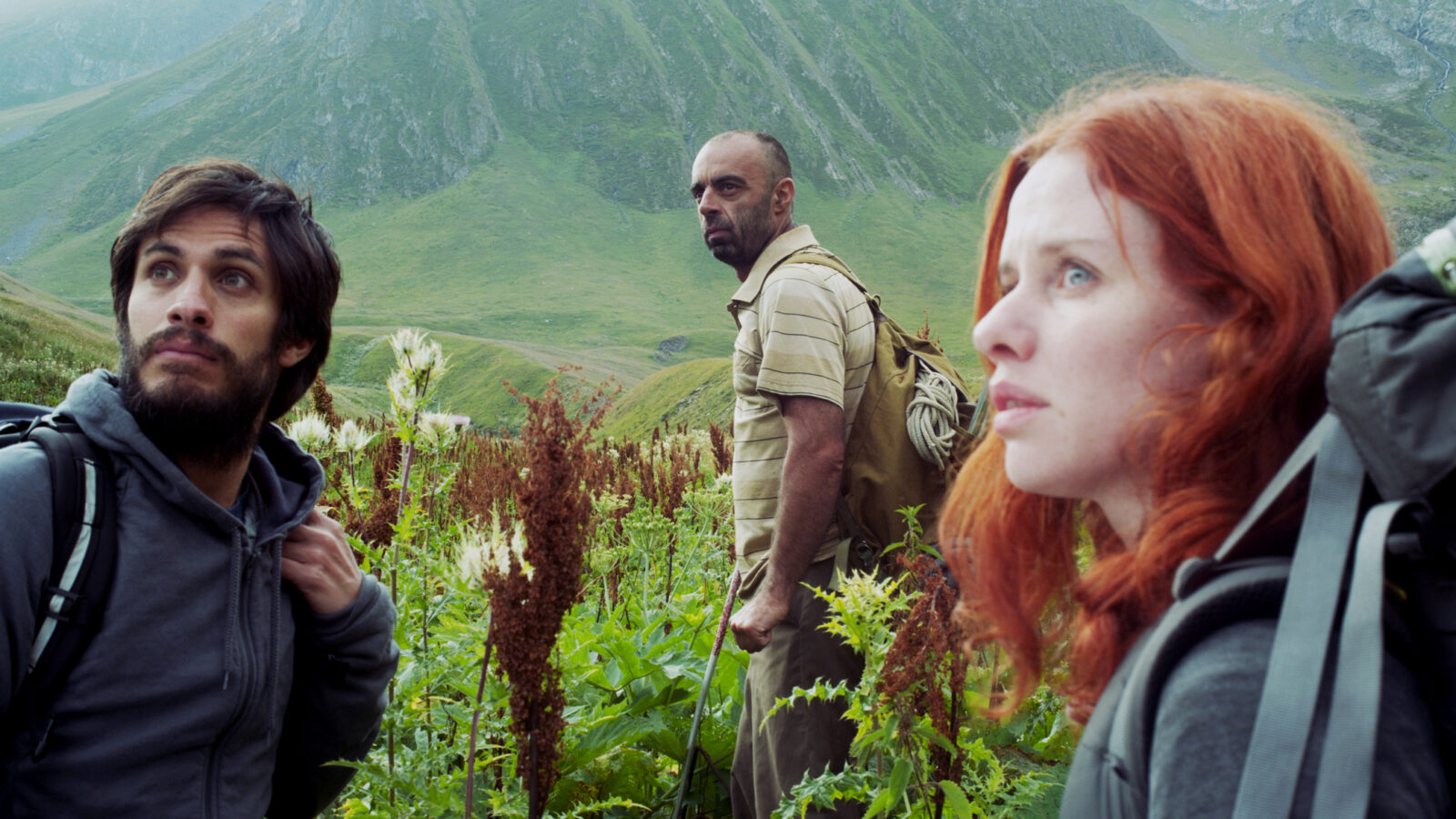
His work has moved between formats and continents, and it has been recognized internationally—Variety named him one of its “10 Cinematographers to Watch” in 2013—but what stays with you when you hear him speak is not the résumé. It’s the worldview: cinematography as relationship, as empathy, as a kind of ethical companionship. Or, as he puts it in one of the most disarming definitions you’ll ever hear from a director of photography: “For me, cinematography is “Autopoiesis”, existence in love. Because love is empathy and complementarity.”
That idea—complementarity—runs through his story like a hidden spine.
He remembers being a child, barely eight or nine, invited by an uncle into a photographic laboratory. The scene is almost archetypal: the red light, the chemical air, the slow appearance of an image on paper. For Briones, it wasn’t just enchanting—it was an initiation into mystery. “I was very impressed to see how the image appeared in that red-lit room,” he recalls. “It was the first time I felt photography had something mysterious that I wanted to investigate, to discover.”
His uncle—Chilean, living in exile in Peru—gave him a tiny pocket camera and a handful of rolls. Nobody taught him how to use it, so the first photographs came out “wrong.” But the “wrongness” wasn’t failure; it was revelation. “All those bad photos had something different from the photos I’d seen everyone else take,” he says. The camera was already teaching him what many cinematographers spend years unlearning: that intention and result don’t always align, and that the gap between them can be fertile.
He describes the feeling with a line that sounds like it belongs in a film rather than an interview: “It’s like a dream inside another dream inside another dream.”
By fifteen, he had entered Peru’s Armando Robles Godoy Film and Television School, an unusually early start that wasn’t driven by certainty so much as obsession—fueled by a school environment where films were projected in 16mm, where a supportive director encouraged students to watch, discuss, and chase references. At that age, Peru’s film industry offered almost no practical promise. Briones remembers the scale of it with blunt clarity: “In Peru, at that time, one feature a year—if you were lucky.”
His parents—seeing what he couldn’t yet articulate—pushed him toward the risk. Not toward safety, toward attempt. There is a sentence of parental wisdom in his account that still hits hard: if you want to live with the frustration of never trying, go ahead; but we advise you to try.
The school’s director made him analyze three films as an entrance test. Briones, who has dyslexia, wrote the analyses with spelling mistakes. The director corrected them kindly and posted the texts publicly on a wall—an exposure that made the fifteen-year-old feel shame. But the line written underneath changed everything: “This is the school we want.” That moment—vulnerability met with endorsement—feels like an early template for the kind of mentor Briones later becomes.
His early professional formation is not a clean ladder of titles. It’s a mix of improvisation, apprenticeship, and sudden responsibility—what he jokingly calls a “dyslexic” path. A group of visual artists invited him to shoot videos of their paintings. He had a particular early camera—affordable, flexible, almost a toy by today’s standards, but full of editing tricks and effects. He and those artists invented together, and a working cinematographer noticed. That led to assisting work, then to short films, then to a children’s series—where Briones learned not only how to operate, but how to operate with others, inside a multi-camera logic.
He tells one story from that period with the kind of tactile detail only crew people cherish: the weight of old HMIs, the assignment to the tripod, the French crew dynamics, the discovery that a focus puller was alone without a second. He was fifteen. The focus puller—Isabelle Ferrandis—noticed his attention and decided to teach him. That decision turns into one of those sliding-door moments.
Soon after, a Roger Corman production came to Peru—part of that era when global producers sought non-union locations, and entire countries could feel temporarily reorganized around a film shoot. Ferrandiz proposed a bold plan: she would start the film, train Briones intensively, and once he was ready, she would leave and let him finish. The Peruvian cinematographer Pili Flores-Guerra agreed. Briones, still balancing school obligations, found himself stepping into responsibility with incomplete tests and imperfect information—relying on math, on practice, on a Kelly card Ferrandis gifted him (a gift that in those days meant real money and real trust, as the gift of the opportunity she gave him). He finished the film. Nobody complained. “Everyone forgot about us,” he says— humor for the best possible outcome: the work disappeared into the film, which is what cinematography is supposed to do when it’s truly serving the story.
Around the same time, he was being fed not only technique but language—books like Néstor Almendros’ A Man with a Camera, and also poetry and political literature: Eduardo Galeano, Neruda, texts that expand a cinematographer’s inner reference library beyond exposure and contrast. It’s striking how naturally his education blends craft and conscience, manuals and metaphors.
Then came Paris. Still a teenager, Briones traveled to France on a repurposed airline ticket and improvised a life structured entirely around watching films. He found a film analysis workshop that came with access to a cinematheque, and his days became an almost athletic routine: morning screening, afternoon screening, evening screening, last session ending near midnight, then the long walk home through Paris.
He didn’t speak French at first. Subtitles were in French. Films were in Italian, Russian, Thai—everything at once. But instead of shutting him out, that overload revealed something foundational: cinema as a universal language. “It allowed me to realize that cinematic language was universal,” he says, “and that you could enter different layers of a film—emotional, metaphorical.”
If you want to understand why Briones’ cinematography can hold both rural and urban spaces with the same tenderness, why it can feel attentive rather than assertive, Paris is part of the answer. Not because Paris “refined” him, but because it taught him that meaning survives translation. The image carries something deeper than words, if you know how to listen.
Back in South America, he listened again—to the pull of Chile. He moved to Santiago in his early twenties, determined to study with Héctor Ríos Henríquez, the director of photography of El chacal de Nahueltoro. Briones tells Ríos’ own story—arriving in Rome wanting to do art direction, redirected into cinematography because of the rules of who was allowed to study what, sleeping in an office until he could find footing—as if he recognizes a mirror: the young person who leaps without guarantee, who survives by adapting, who becomes a master precisely because he had to.
In Chile, history was shifting. The Pinochet era ended; democratization began; an audiovisual movement started to bloom. Briones arrived, as he says, “at exactly the right moment.” He shot shorts, met documentary filmmakers, learned narrative through reality—how to build story not from control, but from attention to what the world gives you.
And then a phone call came that sounds like a scene written by Raúl Ruiz himself.
Ruiz—Chilean-French, already established in Europe—wanted to experiment with small domestic cameras, to chase a kind of freedom he couldn’t always access on larger productions. Briones meets him in a café. Ruiz places a small case on the table, opens it, shows a consumer camera, and asks simply: do you know how to use this? Briones demonstrates. Ruiz closes the case and says, in essence: good—this one is mine, I’ll bring another. They meet at Ruiz’s house, eat breakfast quickly, and start filming experiments, including the most joyful kind of cinema test: “How do you make an earthquake? You shake the camera.”
That play became the seed of Cofralandes and then the film Cofraland. But more importantly, it became a relationship. Ruiz didn’t introduce Briones as “the cinematographer.” He introduced him as a nephew. Briones describes the feeling of Ruiz arriving in Chile as if he had been asleep until then—because Ruiz would stimulate him with ideas, information, theory, and then leave again for Europe, and Briones would spend that time “uncompressing the files,” studying, learning.
If you’re a director of photography reading this, you probably know the rare value of that kind of mentorship: not a master who hands you recipes, but one who expands the space of what you believe cinema can be.
Still, Briones resists the neat mythology of “turning points.” When asked to name the key steps of his career, he answers with an image: Escher’s staircases. “Sometimes I thought I was going down and I was actually going up,” he says, “and sometimes I thought I was going up and I was going down.” The point, for him, isn’t a ladder—it’s transformation. Even when you return to the same place, you return as someone else.
That perspective shapes how he defines the job itself. “The cinematographer’s work is to complement,” he says. “Not only in terms of building the image or aesthetics, but to find what’s missing—and how to complement the director who is trying to make a journey.”
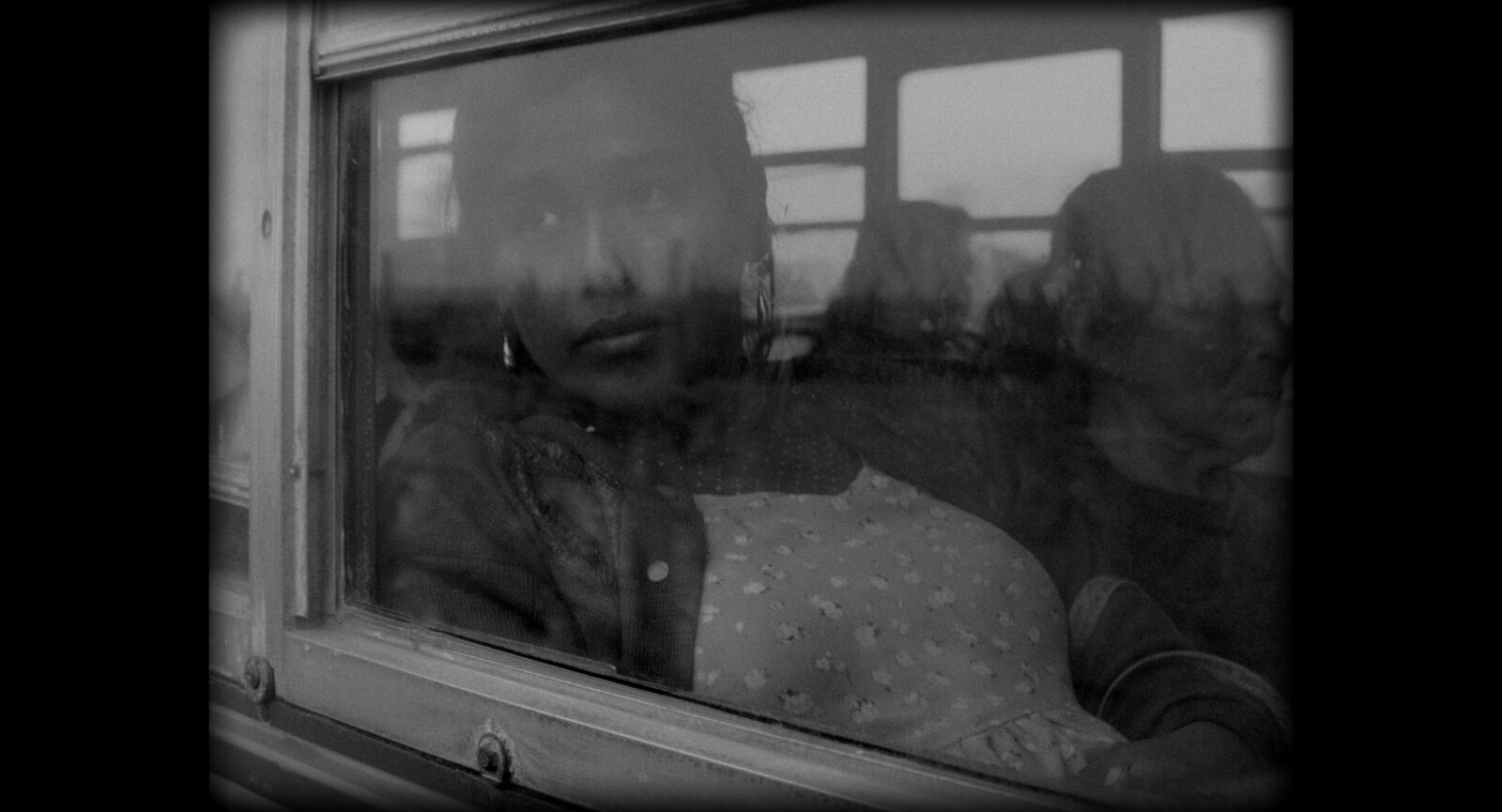
He uses the word journey repeatedly. For Briones, a film isn’t a product; it’s a long-term pursuit that often takes six, ten, twelve years from first idea to final release. He mentions Song Without a Name (Canción sin nombre), directed by Melina León—shot in black and white—as a project that took over a decade to exist. He didn’t just photograph it; he also served as a producer, and the film reached Cannes’ Directors’ Fortnight in 2019. In the same spirit of building cinema as a shared structure, he has been involved as co-producer or associate producer on works such as Too Late to Die Young (Dominga Sotomayor, Best Director at Locarno), Matar un Hombre (Alejandro Fernández Almendras), and others—evidence that his idea of “complementing” sometimes extends beyond the frame and into the whole ecosystem that allows a film to be made.
That ecosystem matters even more in South America, where he sees filmmakers less as industry workers and more as artisans—highly sophisticated artisans, yes, but artisans nonetheless. “We’ve always had to invent fabulous things from nothing,” he says—an idea every Latin American crew member recognizes in their bones. Scarcity doesn’t automatically create art, but it does create a certain kind of creative reflex: the ability to solve, to adapt, to build beauty out of constraint, to keep going when the infrastructure isn’t there to carry you.
And it’s here that Briones becomes, quietly, a spokesperson for the continent—not in a flag-waving way, but in a human way. He insists that borders are thinner than we pretend: different languages, different accents, but shared realities. He also insists on connection as a necessity, not a luxury. “Cinema brings us together,” he says, even when there is no film yet—just conversation, just a shared language.
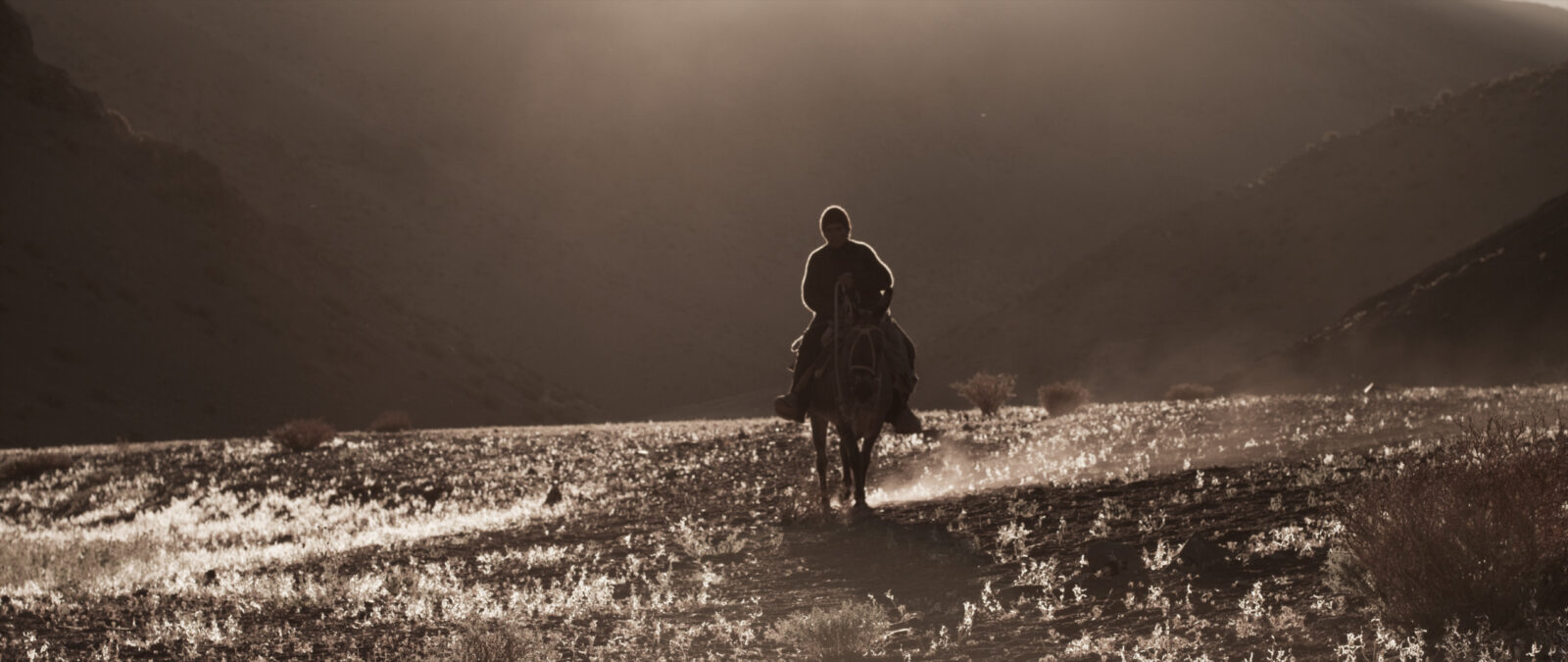
When asked what people outside the region are missing by not knowing South American cinema, his answer is simple and tender: “If you want to speak with your inner being, I invite you to watch films from South America.”
For an audience of cinematographers, it’s tempting to chase the “reference list” version of someone: the definitive three films, the posters you put on a wall. Briones hesitates—his cinephilia is too vast to reduce honestly—but he offers a constellation that feels revealing: Tarkovsky’s Stalker; Ruiz’s Time Regained; Angelopoulos’ Ulysses’ Gaze; Kubrick’s 2001: A Space Odyssey; Béla Tarr’s Werckmeister Harmonies. These are not “pretty cinematography” picks. They’re films about time, memory, metaphysics, and the way images can carry thought.
That same sensibility shapes how he leads crews. Briones doesn’t romanticize set life; he acknowledges the hard truth that people can be difficult, directors can be difficult, and sometimes what you’re managing isn’t lighting—it’s psychology. But he frames it with compassion: people are often difficult because they’re living inside their own private hell, or walking through purgatory, or—rarely—already in paradise. If you can recognize that without judgment, the work can grow.
His leadership philosophy comes through a story about a conductor who realizes he doesn’t need to be the instrument; his job is to help the orchestra give its best so the music can touch hearts and spirits. Briones says plainly: “I am here because of the generosity of other human beings.” And because he knows that generosity built him, he tries to build teams the same way—travelling often, working with local crews, keeping loyalties where trust exists, and inviting new people in for diversity. He asks focus pullers to choose their own teams when possible. He cares about balancing gender, about balancing origins, about making the department feel like a living organism rather than a hierarchy of fear.
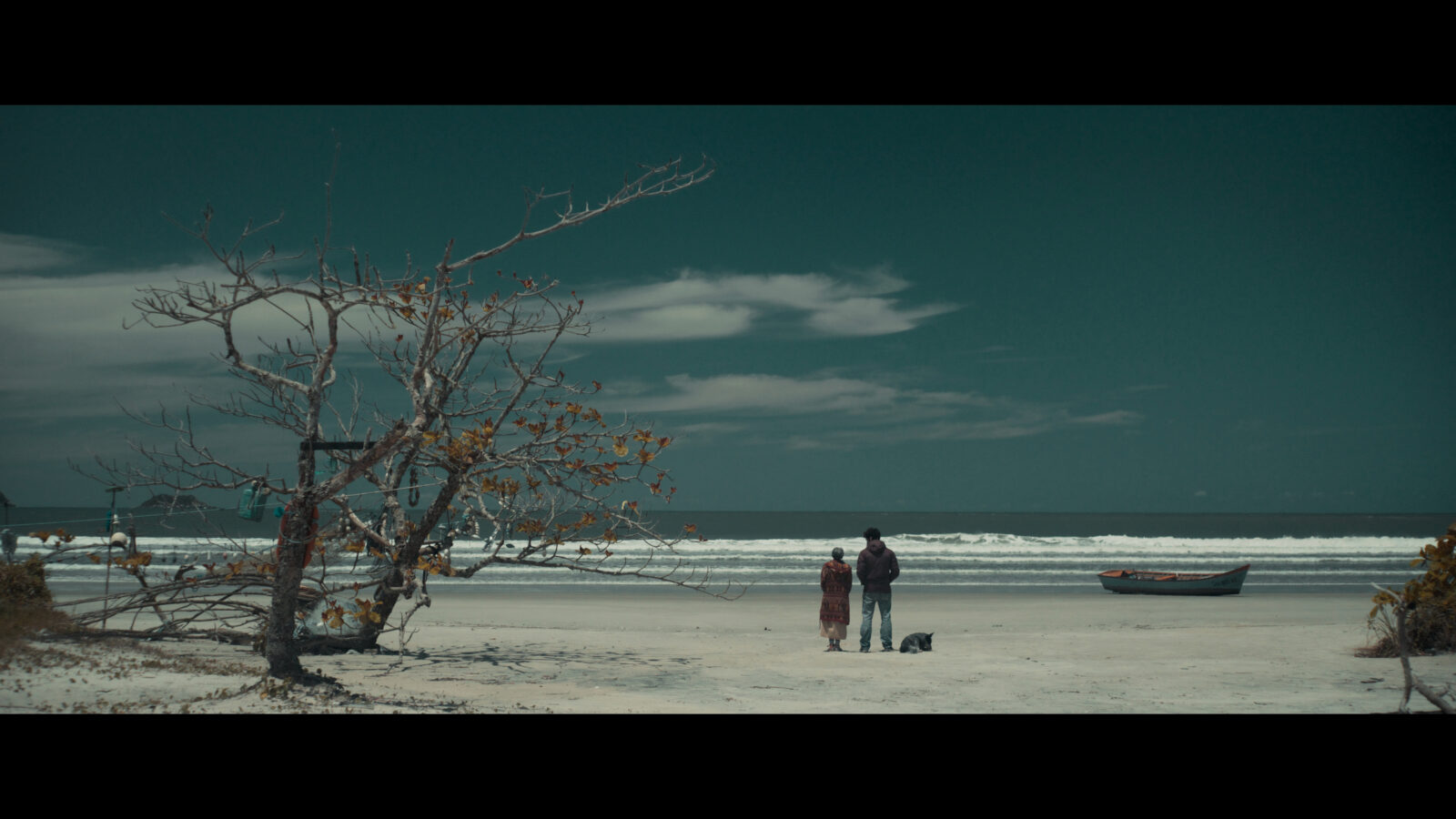
That word—organism—leads naturally to why he values cinematography associations in Peru, Chile, and Brazil (DFP, ACC, ABC). For Briones, associations are not status; they’re mutual care, especially in precarious contexts. He explains it with a metaphor that could be a short film in itself: someone realizes they’re thirsty; the group responds. Then the metaphor expands into ecology: a forest where trees signal each other, where the whole system adjusts to support the one that’s struggling. “We are part of a forest, and none of us is more important than another. What matters is that the forest grows.”
If you stay with Briones long enough, you eventually arrive at a concept that isn’t often spoken out loud in camera departments: autopoiesis—the idea of living systems that continually produce and maintain themselves. He links it to cinema, to community, to love. He says: “The exact word is autopoiesis… existing in love. That is cinematography for me.”
It’s tempting to call that poetic, and it is. But it’s also practical.
Because if you truly believe cinematography is existing in love—meaning empathy, complementarity, mutual care—then you light differently. You move the camera differently. You treat a location not as an aesthetic object, but as a living place. You treat a director not as a client, but as a traveler. You treat the crew not as labor, but as the forest.
And maybe that’s why Briones’ trajectory—Peru to Chile to Brazil, rural to urban, film to digital and back again, documentaries to fiction, cinematography to producing feels like the natural footprint of someone following one consistent instinct: to get closer to what’s human, and to make images that don’t just show the world, but recognize it.