There’s a particular kind of person who grows up on film sets the way other kids grow up in a garden or a garage: surrounded by the family trade, absorbing it through osmosis before they even know what it’s called. Jana Hojdová, AČK is that person. Her father is a cinematographer. Her mother is a director. And her earliest memories aren’t only of toys or cartoons, they’re of sitting on her father’s knees behind a camera, or perched on a crane thinking, quite reasonably, wow, “where am I”.
”I was a stand-in for the gray card and color chart,” she says, laughing about it now. Most kids play house. Jana was play-testing exposure with her dad. He’d tell her to turn, smile, look into the camera, and to her it wasn’t work, it was a game. A very good one, apparently, because she never stopped playing it.

What’s charming is that her love for the craft didn’t arrive as some lightning-bolt epiphany. It crept in sideways, through hairdressing rooms and costume departments she found fascinating as a kid, through the dust of an old factory her father was shooting in, through a children’s TV series her mother directed that Jana would race to after school on the tram, begging her mother to make the shoot last longer because she didn’t want the fairy tale to end. ”I cannot imagine living without it,” she says, and you believe her, because she’s been rehearsing that sentence with her whole life, not just her mouth.

She went the classical route: FAMU, the Prague film school, camera department, writing and shooting her own shorts. Her graduation film, The Dream, eventually earned a nod for its cinematography at Camerimage 2015 and won the prestigious Jaroslav Kučera Award bestowed by the AČK. Her graduate film was shot on 35mm, and she’s unsentimental but firm about why that mattered. When you’ve only got 360 meters of film and no budget to reshoot, you count your shots before you commit to one. You show up prepared or you don’t show up at all. It’s a discipline she thinks the industry has quietly lost in the SD-card era, where you can burn through takes without ever really deciding anything. She’s not anti-technology, far from it, she’s thrilled by what modern sensors and LEDs let her do, especially the flexibility of shooting at night without hauling in lighting rigs. What she misses is something more atmospheric: the days when only the director and the DOP could look through the viewfinder, before the video village turned into a jury of five monitors and a chorus of opinions. ”Everyone who walks by can tell you something,” she says, clearly still a little exasperated by it. ”I find it’s incredibly misleading and distracting.”
If you’re picturing someone precious about gear, recalibrate. Jana doesn’t always chase a signature look or a favorite piece of glass, she says the job is fundamentally about adapting to whatever the story needs and director needs, whether that means fifty long static shots across an entire feature or an entire film shot handheld, running. What she does carry with her, literally, are two light meters: one inherited from her father, and one given to her by Robert Richardson. She wears them like talismans. Digital cameras don’t strictly need a meter anymore, but she still uses hers, not out of nostalgia exactly, more as a way of staying anchored to the scene, the same reason she insists on operating close to the camera herself rather than handing that connection off to someone else. ”It’s your best friend on set,” she says.
She’s refreshingly clear-eyed about the crew dynamics that make or break a shoot, too. Her ideal set has a small, trusted inner circle, first AC, key grip, gaffer, briefed thoroughly before the cameras roll. She name-drops the Once Upon a Time in Hollywood set, where she felt everyone was simply glad to be there, nobody clock-watching, nobody negotiating for an early wrap. It’s less a management philosophy than a description of people who actually like their jobs, which turns out to be the thing she’s actively curating for, on every project.
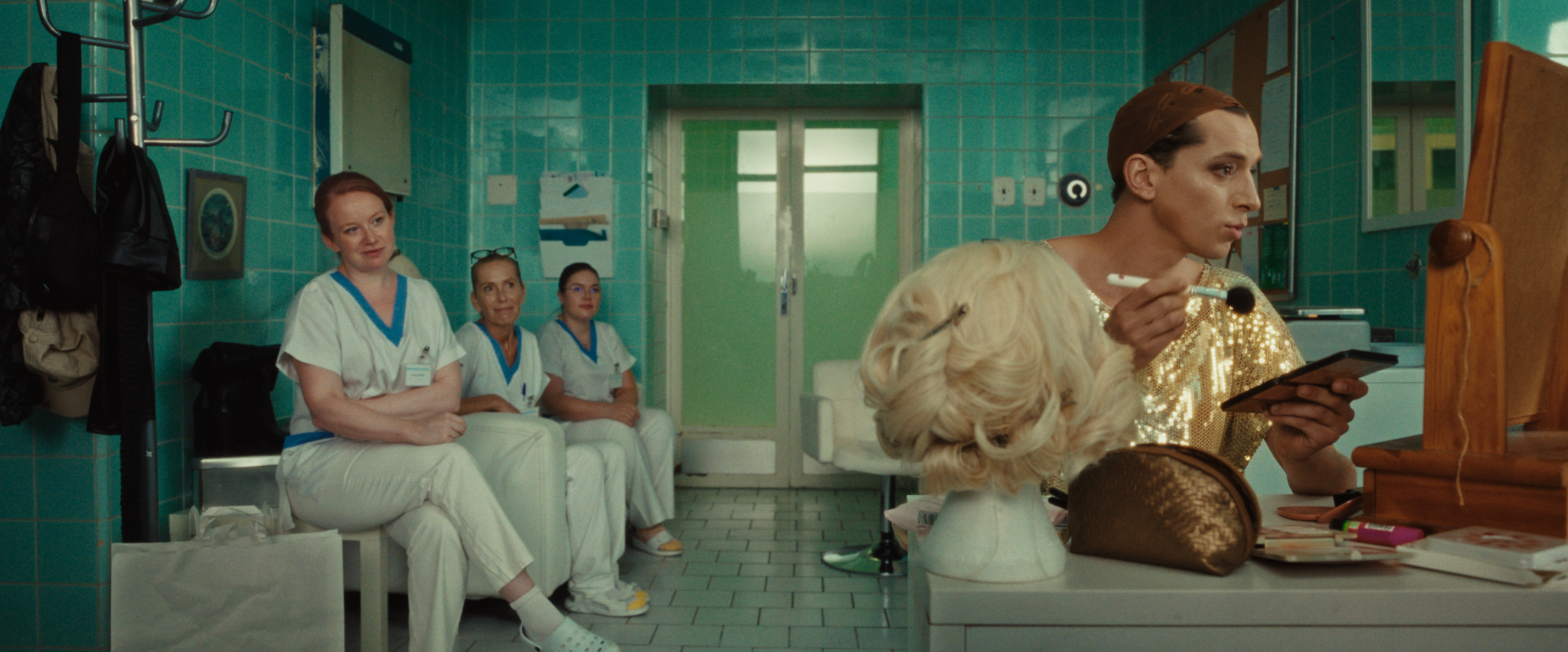
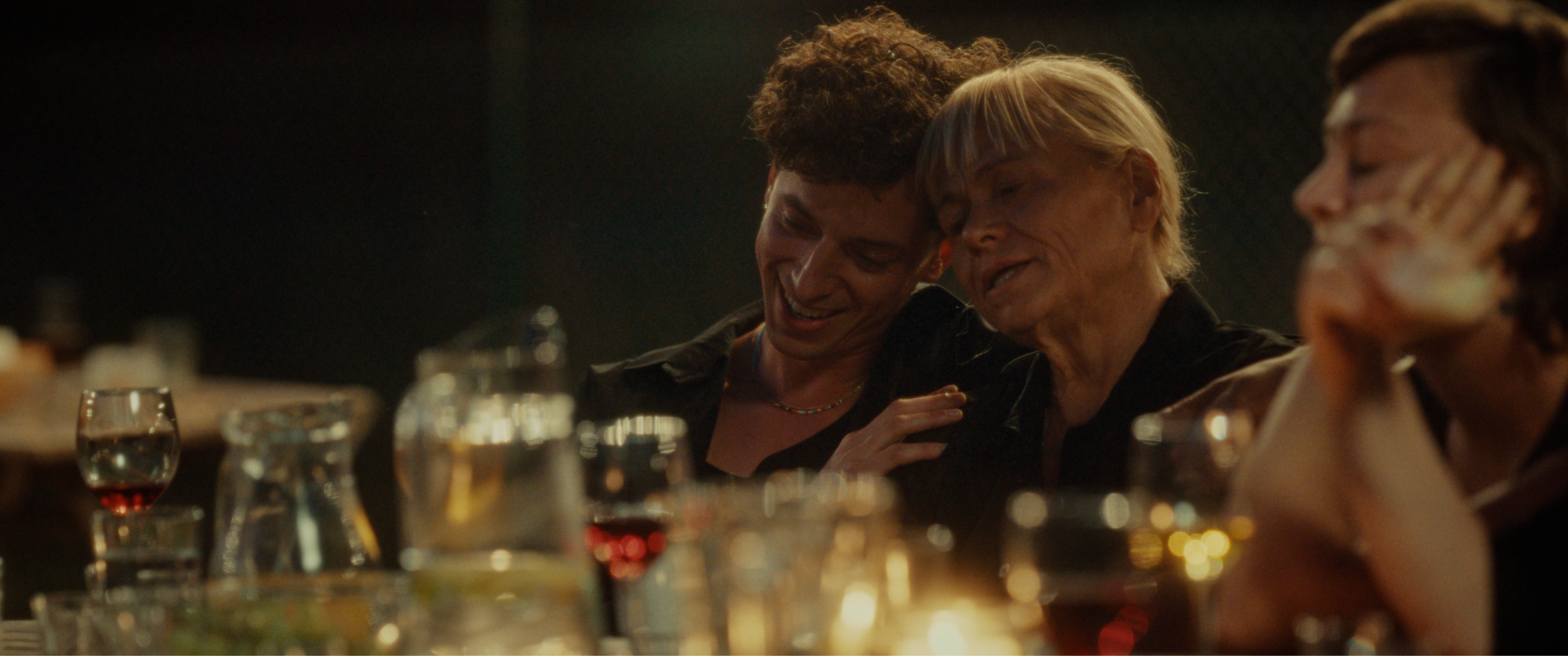
She has served as DOP on features including Mirrors in the Dark and And Then There Was Love…, Hello, Welcome, and Chica Checa, all directed by Šimon Holý. Mirrors in the Dark and And Then There Was Love… had their world premieres at the Karlovy Vary International Film Festival, while Chica Checa was selected for the festival’s Main Competition.
In the eternal debate of ”fix it in post” versus ”get it right in camera,” she comes down hard on the side of the camera. Costume colors, production design, all of it should be locked in during prep with the people who actually build those departments, not left as a note for the colorist. She loves grading, genuinely, but treats it as a finishing tool rather than a rescue mission.
Ask her for reference films and she doesn’t hedge: Persona, Natural Born Killers, and Ivan Passer’s Intimate Lighting, a formally audacious pick sitting right next to a formally audacious Bergman film and a quiet Czech New Wave gem about ordinary people. She saw Inglourious Basterds four times in theaters at nineteen, chasing not just the red colour. It tells you something about her range that she can talk about Bergman’s poetry and Tarantino’s or Stone’s rule-breaking with the same fire.

Right now she has just finished a documentary a decade in the making, about, fittingly, a cinematographer. ”Robert Richardson: The White Devil”, her film on Robert Richardson, started as her diploma thesis and grew into a feature that premiered at Karlovy Vary International Film Festival. Six hundred fifty hours of footage cut down to 105 minutes, with Jana appearing on camera herself, which she admits made the whole process considerably harder. She talks about Richardson’s total devotion to the craft, camera as his whole life, with something between admiration and recognition. It’s not hard to see why the subject found her.
”Cinematography gives you the way to express yourself through images, without sound,” she says. ”I think I found the best job I could do. It’s beautiful.” Simple, unfussy, and coming from someone who’s been doing this since she was old enough to sit still on a crane, entirely earned.