Québec cinema has a familiar pulse: ambitious stories, high emotional temperature, and budgets that force you to be clever instead of comfortable. Canadian cinematographer Marie Davignon, CSC thrives in that space: equal parts craftsperson and collaborator. She had a triple nomination at CSC Awards in September 2025, she was nominated for “Best cinematography on a feature” for Balestra and Miss Boots and won for Code 8 Part II the Netflix sequel for “Best cinematography in a non-theatrical feature”. She also won “Best cinematography” at the WIFF festival in Vancouver for Black Conflux. Her credits also include Beans (Canadian Screen Award nomination for Best Cinematography), the documentary All That We Make (Fermières), and Montreal, My Beautiful (Montréal, ma belle). But for working DPs, her résumé is only the surface; the more interesting part is how she describes the job: finding the one precise combination that makes a film breathe.
Her relationship with cameras starts early and in stereo. As a teenager, she shot stills on her father’s old 35mm while also becoming the family’s designated memory-keeper. “I was the one holding that camera… the family camera,” she says. She didn’t arrive through a straight film-school-to-set pipeline, either. She was studying health sciences in Québec’s CEGEP system, sneaking into friends’ cinema classes whenever something interesting was happening. When she finally entered a cinema program, she realized she didn’t even know what a cinematographer was. “In my mind there was no difference between the cinematographer and the director,” she admits. A university cinematography class felt intensely technical, and her response was pure pragmatism: volunteer, shoot, learn by doing. “I have no clue really, but I’m gonna try to do it.” It went well, and the pivot was emotional: “I see things… in my mind, they come as images.”

After earning a scholarship that allowed her to intern with established Québec DPs, she received advice that still sounds radical in many markets: you don’t always need to climb every rung. “Someone told me that I didn’t have to go through the ladders,” she recalls. “I just had to do it.” She assisted briefly, started receiving more assisting calls, then made a clean cut, she’d rather spend those years becoming a better cinematographer than investing in a parallel career as a camera assistant. The rest was the unglamorous part: shorts, festivals, video clips, documentary, corporate… anything that put a camera in her hands and the image under her responsibility. “Anything that would come my way, I would do it if it involved a camera,” she says.
A key early reputation-builder was the short Faillir (dir. Sophie Dupuis), her first financed short with a real budget. Small, but meaningful. People still bring up its cinematography, she says, and while it didn’t hand her jobs overnight, it helped. What really accelerates work, in her view, is the long game of relationships: you grow alongside directors. “When you’re a young cinematographer… you work with young directors mostly,” she says. “But you all grow together.”
Ask her what she loves most and she doesn’t romanticize one niche. Movement, lenses, lighting purity. She talks about the whole build: finding all the details that will come together until the film’s look clicks. Lens choice, camera, palette, lighting colors, movement, framing, layer after layer, always in service of what the story needs. She’s also a strong believer in testing as a creative tool, not a defensive habit. “I’m very big into testing and researching prior to the shoot,” she says, describing that familiar DP moment when the one lens that never worked suddenly becomes perfect: “Something magical happens when you’re like, ‘Oh yeah, this is it.’”
That “this is it” doesn’t stop at wrap. Davignon is deeply post-aware, but not in a “fix it later” way. She maintains a close relationship with her colorists, exchanging references in prep and checking in after the first shoot days. Her ideal is simple: the monitor image should already be close to the intended finish. Then post becomes finesse, not rescue. Color, she says, is a calmer space where you can “process and finesse everything” without the chaos of set.
Her environment matters, too. Québec’s industry, she notes, is active but often underfunded, which creates a local culture of learning to build images with very limited resources. That constraint shapes taste and problem-solving, and it sits inside a broader blend: a North American industry with a real European influence in sensibility.
“I believe excellent cinematography is so seamlessly integrated into the film, that people forget the images were crafted,” she says. If the image announces the crew’s presence, she’ll tell her team: “I can see we’re here.” Her preference is for texture and an organic feel. Never too crisp, never too clean. Even when she pushes color, she wants it motivated. “I like when I put some green… it has to feel like an old fluorescent,” she says. “It has to be a little dirty.”

That same balance design versus life shows up in how she talks about prep and instinct. She loves prep, but she’s blunt: there’s never enough time. Prep isn’t about locking choices; it’s about knowing the project deeply enough to improvise under pressure. She describes a “very instinctual part” of shooting, especially when time evaporates (as it often does in TV). And framing, for her, is where instinct lives. “Searching for a frame is… not a rational thing,” she says. “It has to come from your guts.” Actors move, reality shifts, something unplanned becomes the truth of the scene, and you feel the frame before you can justify it.
Her references are practical rather than performative. She cites Dallas Buyers Club as a proof of concept that you can build images with natural light, a lesson that helped her shoot an early feature on a shoestring. She also points to Punch-Drunk Love for the way camera, blocking, and controlled chaos can tell a story through movement and rhythm. Sicario is also an important reference. for the finesse of the craft of cinematography. “I find that Deakins masters the convergence of the beauty and the real… and that is what I mean when I say I don’t want us to be there in a frame, I think he’s the master of that, subtle, elegant and yet beautiful. And this film is also directed masterfully.”
When asked for her own “business card” films, she mentions Black Conflux, partly because it was her first feature and she’s still happy looking back, which is its own quiet victory. She also mentions Miss Boots for style and Balestra for finesse, hinting at where she wants to go: more genre, more visually driven worlds. “I am looking to do more stories with an edge or a twist in the cinematic approach. I am dreaming of working with directors that want to explore the language. I do think directors like Arri Aster, Yorgos Lantimos, Ruben Öslund, the Sadfie Brothers to name a few, are very interesting in that regard”
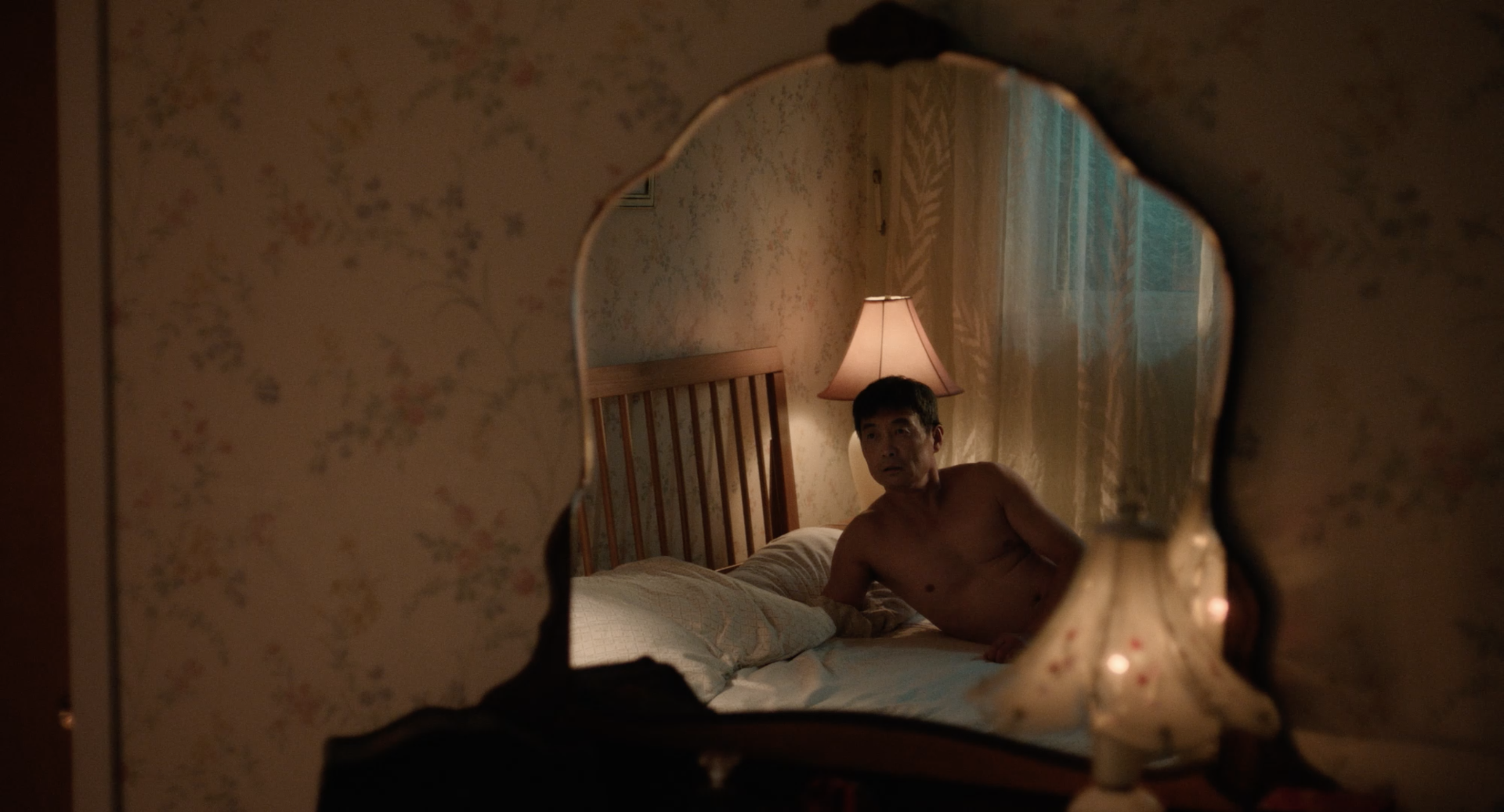
She speaks warmly about Montreal, My Beautiful, describing a camera that “dances with the actors,” built on long pans, tableau-like frames, and extended shots that let you experience the scene rather than chop it into coverage. A small example says a lot: a couple in bed, not on good terms, and a mirror line splitting them inside the frame. “It adds something,” she says, letting the image do the explaining.
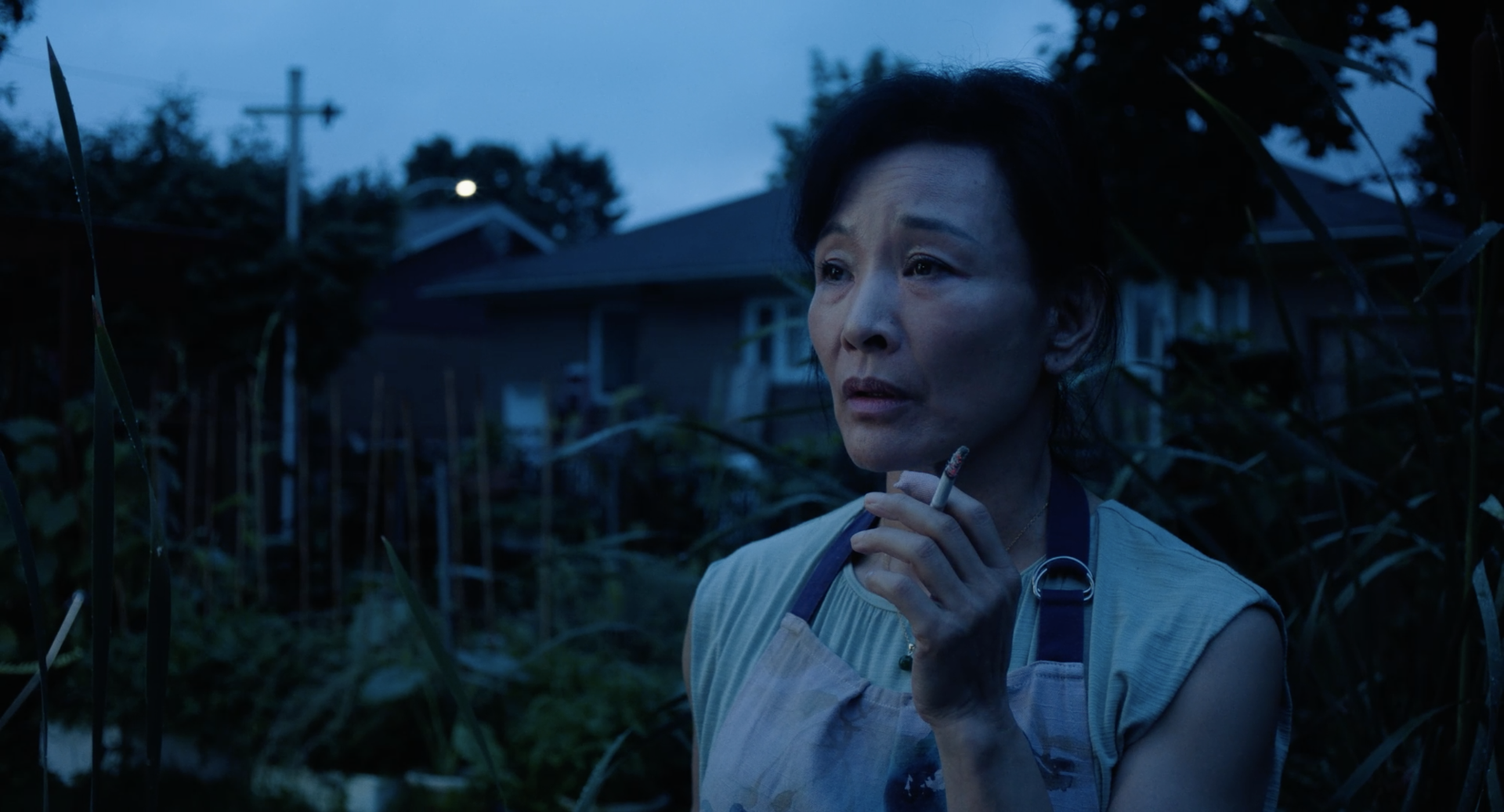
And then there’s Beans, which reads like a manifesto of her sensitivity. She and the director committed to a strict POV: tell the story exclusively from the young protagonist’s perspective, keep the camera at her height, keep the world sized the way she experiences it. “She was the camera,” Davignon says. The goal was a tightrope: documentary-adjacent realism with a cinematic experience, natural light that feels real, “a little enhanced,” never decorative.

If you try to bait her into a gear war, she doesn’t bite. “I don’t think the tools define the cinematography,” she says. It’s choices, taste, and story support. She’s teaching now and has seen the split firsthand: some students know every technical term, others can make images that land. The craft still lives in the gap between knowledge and feeling.
AI is the one topic where she allows a flicker of anxiety, at first. She felt threatened, she says, and expects disruption, especially for commercials and short-form. But she draws a line around what she believes won’t disappear: human-made art. “Art is never going to be replaced by a machine,” she says, with the realism that fewer people may be able to make a living from it.
These days she’s prepping a Québec series shooting this summer, building mood boards, reuniting with a director she studied with, and teaching university students with an eye toward visibility. She wants young cinematographers, especially women, to see that the job is possible, that the set belongs to whoever can hold the story with images.
Elevating a story with images Maybe that’s the cleanest summary of her work. Davignon’s images don’t try to prove how smart the cinematographer is. In her words: “Powerful images are not only beautiful, they carry the emotional and narrative weight of the film.”