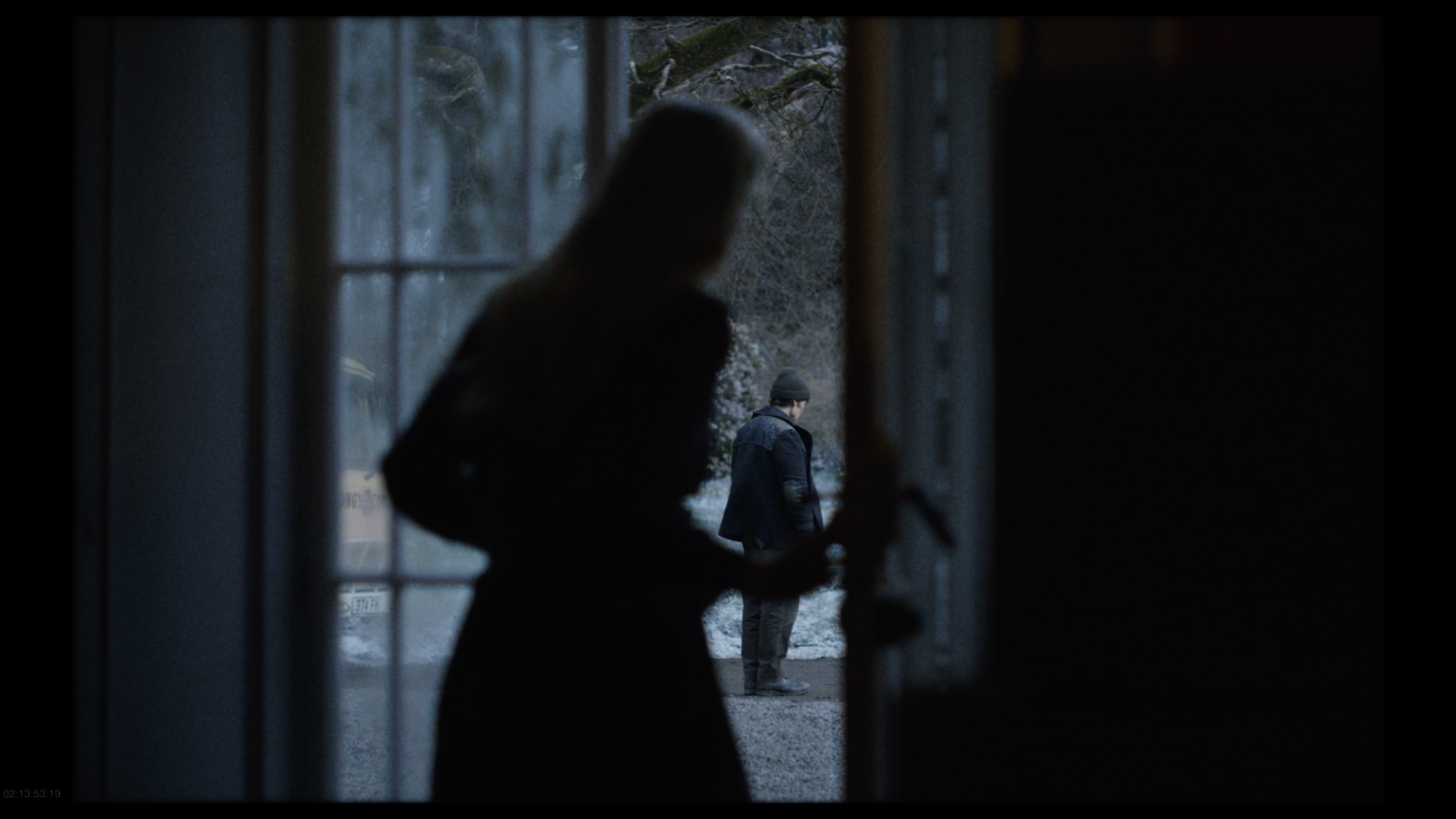
The name Frank van den Eeden, SBC NBC, holds a significant place in the world of visual storytelling. A Dutch cinematographer celebrated for his evocative work and profound collaborations with directors like Lukas Dhont, Fien Troch, and Tim Mielants, Frank’s filmography is a testament to his talent. From the poignant intimacy of Close (2022) and Girl (2018) to the stark beauty of Home (2016), his films have graced the screens of Cannes, Venice, Berlin, and Camerimage, consistently earning accolades such as the Grand Prix at Cannes and an Oscar nomination for Close. This year, his latest work, Small Things Like These (2024), opened the Berlin Film Festival, further cementing his place among the industry’s most respected DoPs.
But beyond the impressive credits and awards, who is the man behind the lens? What drives his distinct visual language, and what wisdom can he share with fellow cinematographers navigating an ever-evolving craft?

Frank’s journey into film began in a small, rural village in the southern Netherlands, long before the internet or digital cameras democratized filmmaking. His childhood in the 80s was shaped by the magic of VHS tapes. “I was a freaky loner kind of teenager who would spend all his time watching films,” he recalls. But his fascination wasn’t limited to the moving image; comic books and drawing also captivated him, hinting at an early, innate pull towards “conveying a story or an idea through something visual.”
Initially, like many aspiring filmmakers, Frank dreamt of becoming a director. He enrolled in film school with this ambition, but a pivotal realization shifted his path. “By the time I really understood what a director did and what a director of photography did, then I switched course,” he explains. He found something “much more appealing to being a cinematographer,” recognizing that he didn’t necessarily have “a story to tell,” but was deeply interested in “helping other people tell their story.”
A childhood realization further solidified this understanding of constructed reality. He remembers his father shooting Super 8 films, which the family would gather to watch once a year. Years later, he discovered an album titled “soundtrack effects for film and television” among his father’s records. “I put this on and I recognized the sounds that he had used on the Super 8 edit that he made,” Frank recounts. “And this was like a little epiphany to me. Like, oh, wait a minute. This is all constructed so there’s a new reality that is, you know, build up from pieces.” This early insight into the deliberate construction of cinematic worlds laid the groundwork for his future craft.
Frank’s early cinematic diet was heavily seasoned with horror films – Lucio Fulci, Romero, all the zombies. “I loved them,” he says, though he can’t pinpoint exactly why they were “super appealing.” But as he matured, his tastes broadened, leading him to discover the masters.
When asked about the film that most profoundly impacted him, he doesn’t hesitate: Stanley Kubrick’s The Shining. He vividly recalls seeing it for the first time on VHS over 40 years ago, being “super scared” and understanding that “this was something unlike the other stuff that I have seen.” What struck him was its departure from conventional horror tropes. “The film was so scary that you know, it didn’t use… the classical building blocks of what a horror film would use at the time, meaning dark environments, cold moonlight, fast cutting,” he observes. Instead, “the horror is much more internal… much more on the psychological level, which brings some reality to it, which even made it scarier for me.”
Though too young at the time to grasp the psychological depth or Kubrick’s masterful use of cinematography, The Shining became a benchmark. “The film has been with me since not only as a… benchmark in a way, but there is something to it. The way, you know, Kubrick worked on, with spaces and tempo and with a camera that’s moving. So he works on this rhythm.” This understanding of rhythm and psychological visual language is something he actively brings to discussions with directors today.
Beyond The Shining, Frank cites Mad Max and Blade Runner as other formative influences. These films, he notes, “create a universe which more or less has not been seen before.” They demonstrated the power of cinema to transport viewers into entirely new worlds, a quality he deeply cherishes.
Frank emerged from film school in the mid-90s, a pre-internet, pre-digital cinema era vastly different from today. He vividly recalls the “struggle” of those early years. With only a handful of short films shown at local festivals, he juggled split jobs – working as a lighting assistant, occasionally a focus puller, and shooting a few short films a year. Promoting his work meant copying edits to VHS tapes, calling production houses, and hoping for a meeting. “It was not easy to find where to go,” he admits, especially as a young father needing a steady income.
Eventually, his short films gained notice, leading to work on local TV series, shot on Super 16 film, before transitioning to feature films. Even if the scripts weren’t always top-tier, he embraced each opportunity to “make the best of it” and infuse it with energy.

Comparing his early career to the present, Frank sees a significant shift. “I think these days it’s more… democratic to get exposure as a DoP,” he reflects. “It’s not as complex and not as costly as it was at the time. So I think people move faster.” While unsure if this speed is inherently good or bad, he acknowledges that young cinematographers can now comfortably claim their title and, if skilled, live up to it much sooner.
At the core of Frank’s approach to cinematography is a deeply human-centric philosophy, one that prioritizes storytelling and emotional connection above all else.
“At the heart of what our job is or what our job should be if you do it well, is… telling the best story and use all the techniques that you can to do this without… being overly technical,” he states. For him, cinematography is fundamentally about “connecting with people on many levels, on artistic level and on crew management level.” This core principle, he believes, “will never, ever change.”
His work, often described as “sensible” and “humane,” delves into the “psyche of characters.” He explains, “The most rewarding and the most fulfilling films are the ones with characters who I am emotionally connected to.” He constantly seeks to visualize the unspoken thoughts and internal worlds of characters, even when their actions might suggest otherwise. “In the script you have the stuff that the characters do, but you have the stuff also that they think. So what they do and think it’s not always the same. And I’d like to always have a look at what are they thinking. And let’s… try to visualize this.” This commitment to emotional depth is a hallmark of his craft.
Despite working in a highly technical field, Frank playfully refers to himself as “probably the least technical DOP you ever spoke with.” He’s interested in technology, but the rapid pace of change led him to a pragmatic approach. “The technology changes so fast that I, in a way, gave up… of being on the top of all technical aspects,” he admits. His guiding principle is “what you see is what you get.”
Instead of mastering every technical detail, he surrounds himself with trusted collaborators who are experts in their fields. “I asked them to explain to me what is important and I asked them to stop talking when I get bored,” he jokes. He aims to be “just technical enough to understand where… things go wrong or where we can have opportunities to create something new or interesting.”
Regarding the rise of AI, Frank acknowledges the “lot going on at a speed that we have never ever seen before.” While not “scared,” he recognizes the economic implications. “If people can… make something at a fraction of the cost… this will evolve up to the moment that a lot of content will be created with the help or solely by AI.” However, for his personal, medium-to-small budget films focused on “personal storytelling” and “very humane and very honest and direct” narratives, he remains optimistic. “The films that I work on… at the heart it is the story and the actors,” a realm where human connection remains paramount.

Frank places immense value on pre-production. “Preparing yourself is for me… at the heart of being able… to perhaps making a film which could stand out,” he asserts. For him, a “solid prep” isn’t about rigid adherence to a plan, but about achieving deep alignment with the director. “Make sure that I’m on the same page with the director… on all levels.” This includes discussing cinematography concepts, scouting locations, and reviewing the schedule.
He prefers to sit down with the director for “up to 10 days or 10 half days” well in advance of production. Reading the script scene by scene, making notes, and exploring visual references – “location pictures, other films maybe, or paintings for color schemes” – allows ideas to “boil” and evolve throughout the shoot. The benefit? “Every discussion or every… meeting we had about an idea saves you time on set.” This thorough preparation fosters an openness to spontaneous creativity, allowing the team to embrace new ideas on set without derailing the schedule.
Teamwork, for Frank, is equally fundamental. “I honestly think bringing something to the screen that is worth watching can only be done with a real crew,” he emphasizes. He believes in fostering an environment where people feel “confident,” “respected,” and “appreciated.” “I enjoy it when I feel respected and appreciated. And I will do my best to give this feeling to other people because I know that what I get from them is better than when they don’t get this appreciation.” A true team, he notes, anticipates problems and offers solutions proactively.
The relationship with the director is paramount. Frank stresses the importance of understanding the director’s “personality… and how do you work in stressful conditions.” He makes a point to explain his own working style and his preference for addressing “stressful situations more or less before they arise.” He hopes for a reciprocal reflection from directors, underlining “the importance of a set that is a… good place to work to feel appreciated and to feel secure.”

After a particularly busy year, Frank is currently taking a well-deserved break, spending time with family, reading books, and watching films. He’s embracing the unknown of 2026, finding value in the “me time” needed to recharge after the intense physical and mental demands of filmmaking. While scripts are on his desk, he’s taking his time, open to what the future holds.
And what, then, is cinematography to Frank van den Eeden? His answer is as profound as it is simple: “Bring life to the screen. I think that’s what it should do at its best.” It’s a definition that encapsulates his entire philosophy – a dedication to craft, collaboration, and the enduring power of human emotion rendered visible.